
How much does a small business website cost in the UK?
For a straightforward small business website built by a professional, around £800 to £3,000 is a sensible planning budget. A single-page site can cost a few hundred pounds. An online shop or a website with more involved features can run into several thousand.
What matters most is what the website needs to do and how much work is included. A service business that wants enquiries needs a different website from a retailer taking orders and managing deliveries.
Budget for the initial build and any running costs separately. If you are comparing a monthly plan with a one-off price, calculate what each will cost over the same period.
Website costs at a glance
Scroll horizontally to see all columns.
| Website type | Indicative build budget | What the project might cover |
|---|---|---|
| A single-page website | Around £300 to £1,000 | An introduction, service information and contact options on one page |
| A small business website with several pages | Around £800 to £3,000 | Separate pages for services, the business, work examples and enquiries |
| An online shop | From around £1,500 to several thousand pounds | Product pages, checkout, payments and delivery setup |
| A larger website or custom functionality | Individual quotation | More extensive content, customer accounts, bookings or connections to other business tools |
These are approximate budgeting guides informed by published UK prices checked in October 2026. They are not a national average or fixed price limits. Offers exist below and above these bands, and the work included varies.
For a small service business, the second row is the most useful place to start. You may need less if your information fits comfortably on one page, or more if you need substantial content preparation or additional functionality.
What should you get for your budget?
For an enquiry website, look for a clear explanation of your services, evidence of your work and an easy way to contact you. The finished site should work on phones as well as larger screens.
Check whether the proposal includes an enquiry form, basic search setup, testing before launch and a way to update your content. Ask what you will receive at handover and who will control the website accounts.
The pages should follow what your customers need to know. A home, services, about and contact page can be a useful starting plan. Add a gallery if photographs help people judge your work. Give a service its own page when it needs a fuller explanation.
Two examples of different website needs
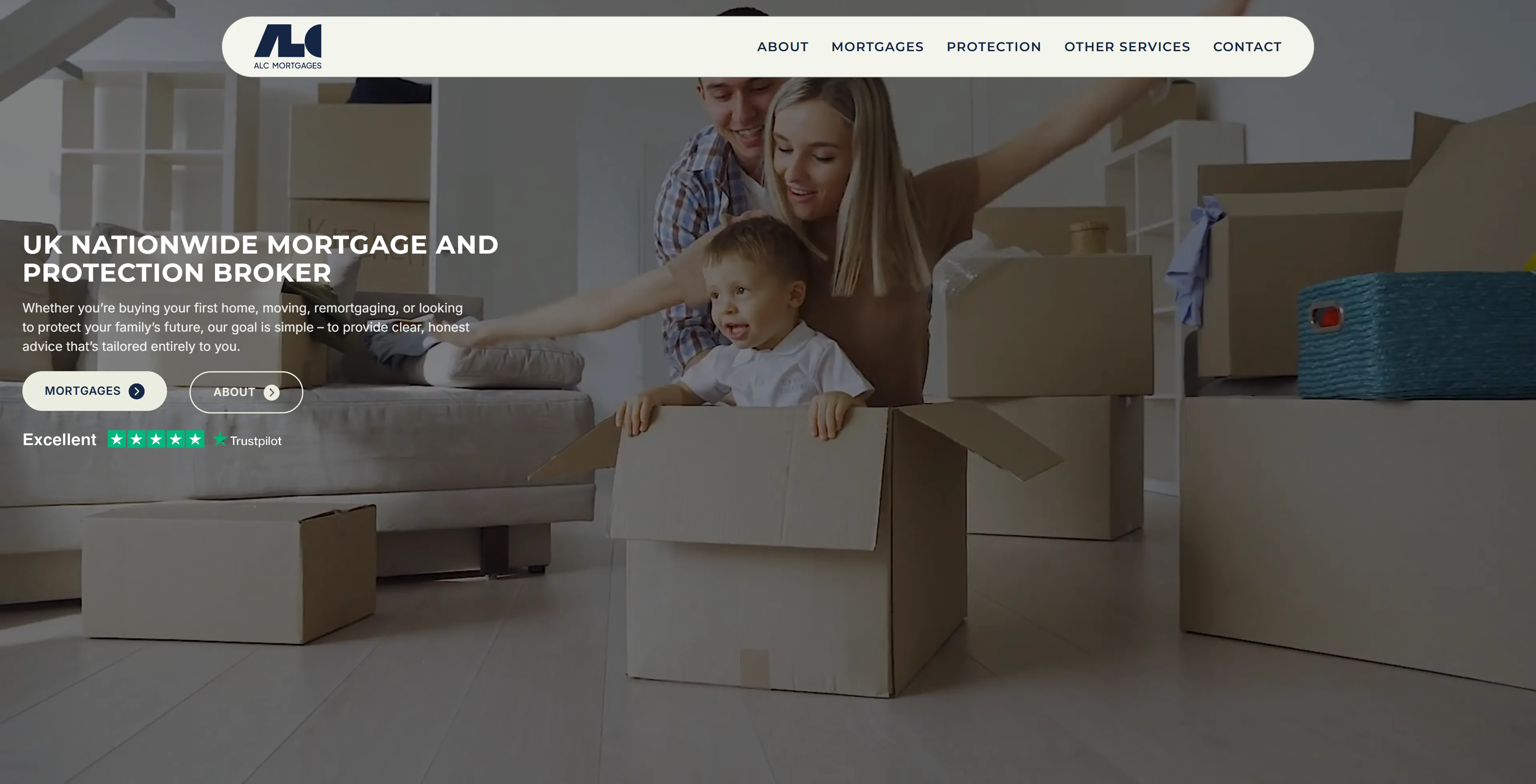
ALC Mortgages is an example of WDSW's Essential work. Its purpose is to present the mortgage adviser's services and give visitors a straightforward route to enquire.
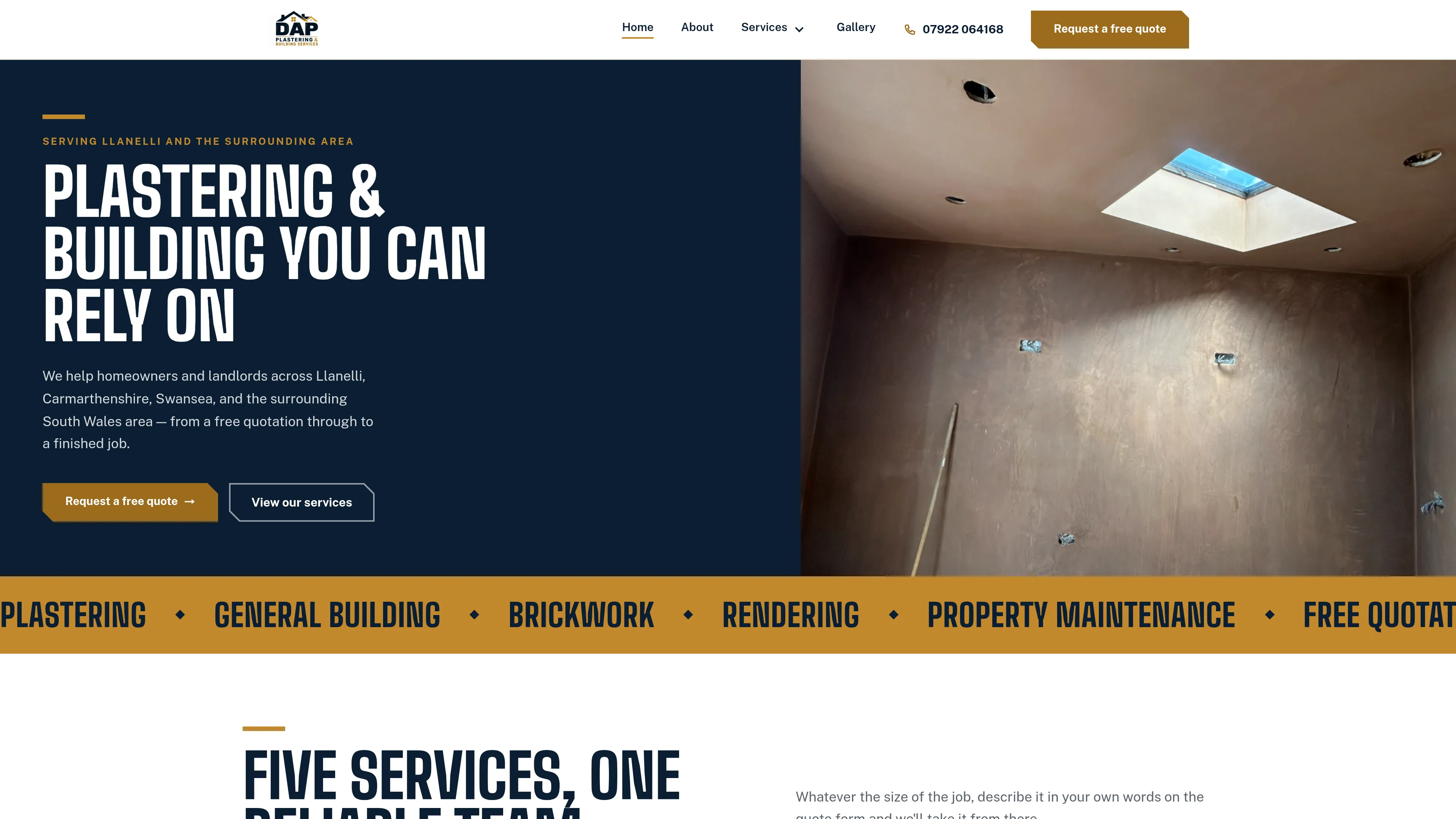
DAP Plastering is a Business website for a plastering and building business, with content the owner can update as projects are completed. For a business showing physical work, keeping project information current is a useful part of the website plan.
When planning your own site, ask what customers need explained before they contact you and what you need to update afterwards. That helps you choose the pages and editing features to include in a quote. These examples show the kinds of work involved; the budgeting figures in this article do not disclose either client's project price.
What changes the final price?
Text, photographs and branding
Preparing content is part of the job. A quote may assume you will supply finished text and photographs, or it may include writing and editing them for you.
Check this before comparing prices. If you need photography, a new logo or existing content rewritten, ask for that work to be listed.
Design and page layouts
An existing layout adapted to your business and a design created around your requirements involve different work. Both can be appropriate. Look at completed examples and check what you can review or change before launch.
Page count is only part of the picture. Ten similar product pages and ten pages with individual layouts require different amounts of work.
Payments, bookings and other features
A contact form is a different requirement from a booking system with availability, payment and confirmation emails. Shops also need decisions about products, delivery and order handling.
Describe what a customer needs to do on your site. The designer can identify the build work and any subscriptions needed to make it happen.
Moving an existing website
A replacement site may need content moved, accounts transferred and old page addresses redirected. Include your existing website when requesting a quote so this work can be considered from the start.
What does a website cost to run?
Check these separately from the build price:
| Running cost | What to ask |
|---|---|
| Domain name | What is the annual renewal price for my chosen name? |
| Hosting | Is it free, included or billed separately, and what does it cover? |
| Business email | Is it included, and what will additional user mailboxes cost? |
| Shop or booking services | Are there subscriptions or charges on each transaction? |
| Updates and support | What can I change myself, and how is additional help charged? |
Some straightforward websites can use free hosting. Others need a paid service, and managed arrangements may include backups or technical help. A hosting charge and an ongoing support charge can cover different work.
Use renewal prices when budgeting beyond the first year. An introductory discount may end, and the number of email users or paid features can change your running costs.
Ask for a list of the recurring services your website will use. There is no single monthly running cost that applies to every small business website.
Is paying monthly cheaper than a one-off build?
A monthly plan can reduce the initial payment and may include hosting or updates. With a one-off build, you pay for the project and arrange any ongoing services separately.
Compare the total over a realistic period. For example:
Build + running costs£1,440
Monthly plan£1,620
Illustrative totals only. Compare what each arrangement includes.
| Illustrative arrangement | Total over three years |
|---|---|
| £900 build plus £15 a month in running costs | £1,440 |
| £45 a month with no initial build payment | £1,620 |
These example figures show the calculation, rather than two equivalent offers. Check setup fees, included support, renewal terms and what happens if you cancel. Some monthly arrangements end access to the website when payments stop.
Choose according to the work included, the help you need and the accounts or website you will control afterwards.
Can you build it yourself for less?
Building your own site can reduce what you pay someone else. You still need to prepare the content, arrange the pages and check the finished website. A paid subscription may also be required for the features you want.
It can suit a business with straightforward requirements and time to do the work. If you keep putting the website aside or need features you cannot confidently set up, paying a designer may be more practical.
Before you accept a quote
Make sure you know:
- The pages, features and content work included in the total.
- How the design review and launch will work.
- Which accounts and deliverables you will control afterwards.
- The recurring costs and any minimum contract period.
- How you can update the site or arrange further help.
Ask to see relevant completed websites. Then compare the proposals against what your business needs, including the total payable and the responsibilities you will take on.
Discuss your website with WDSW
WDSW builds websites for businesses across South Wales and the UK. Essential websites start from £795 for up to four core pages. Business websites start from £995 for more than four pages, with the project plan agreed around your requirements.
Ask Daf for a quote with a few details about your business and what your website needs to do.